The Art of Calm: How Creative Expression Heals the Mind and Body
Exploring the science and soul of artmaking as a path to balance, mindfulness, and joy!
When I make art, my mind centers, my nervous system calms, my focus peaks. Since I was a small child, I have personally felt how making art affects well-being. The way the creative act interacts with body-mind communications has been the subject of numerous studies and art therapy is an evidence-based healing modality.
“It was very relaxing,” one wrote. “After about five minutes, I felt less anxious. I was able to obsess less about things that I had not done or need [ed] to get done. Doing art allowed me to put things into perspective.”–Drexel University Testimonial
For example, research at Drexel University found that making art reduces stress hormones. Since stress hormones are detrimental not only to mental health but physical health too, the direct line from art-making to lowered stress is worth our attention. But as affirming as research like this is, it’s not a surprise to me.
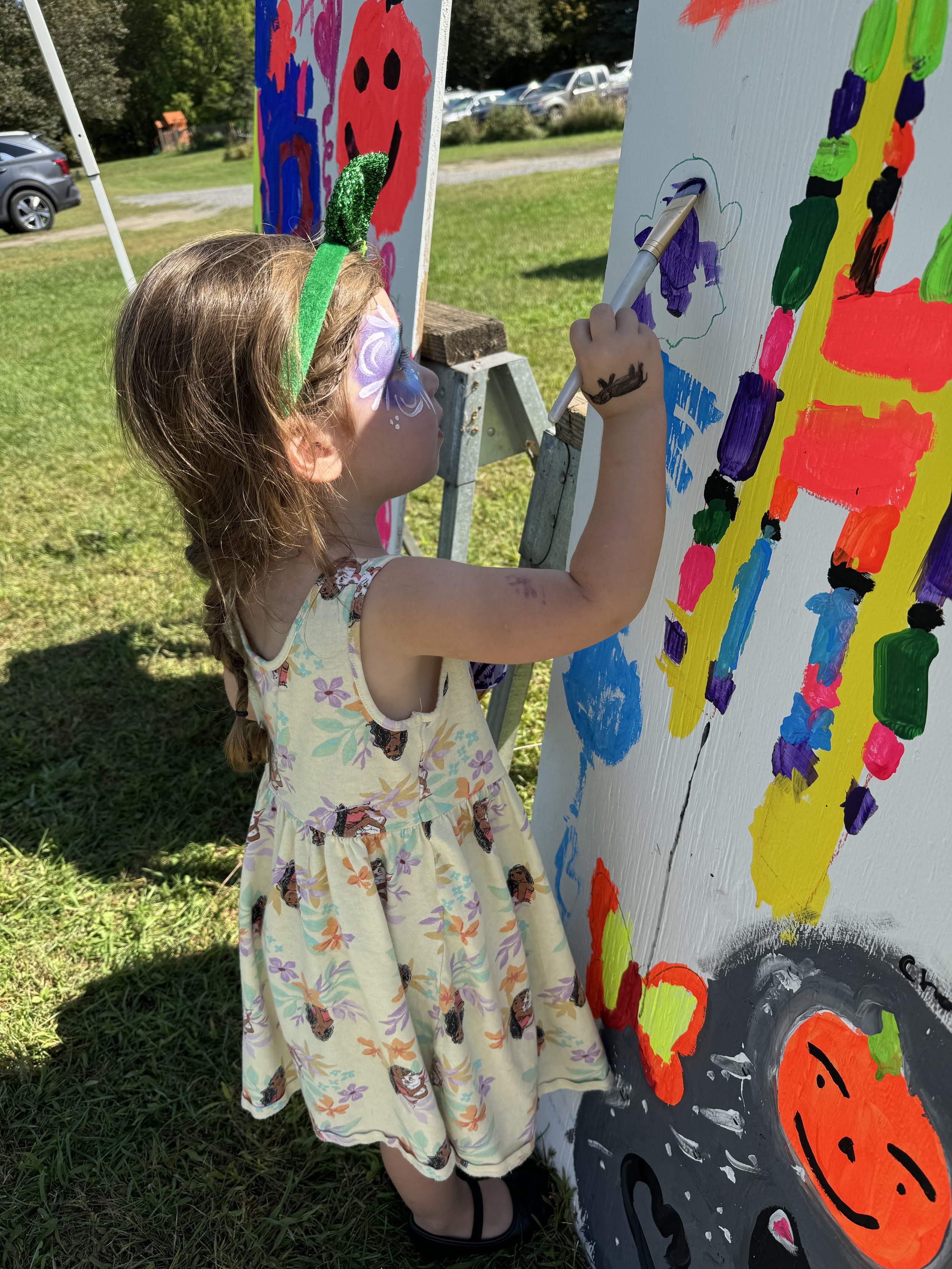
As a school-based art educator for many years, I saw firsthand that time spent in the art studio could center highly activated children and spark joy in students of all ages. Skill level and art media don’t really matter. It’s the practice itself. Art-making is a form of creative meditation.
To learn more about how I incorporate trauma-informed art practice into therapeutic experiences for children, reach out to me via my website today. I am not a licensed art therapist (LCAT) but I am certified in creative art and sand play therapy.
The Mental Health Benefits of Making Art
The creation of art has been proven to help us in many ways. Some are listed below:
Stress reduction – Tapping into the creative part of your brain lowers your cortisol levels. That physical effect translates immediately into feeling calmer and more centered.
Mindfulness – Artmaking is meditative. It helps you access a quiet level of focus that can transform negative cycles, like worry, hurtful self-talk, and intrusive thoughts. Any form of mindfulness increases resilience and calm.
Mood stabilization – The creation of art releases neurotransmitters like dopamine and endorphins naturally. These brain chemicals are directly responsible for elevating mood and fostering feelings of satisfaction, peace, and joy. Regular artistic expression can help keep your anxiety at bay by maintaining a healthy dose of those feel-good hormones.
Positive distraction – There is something to be said for finding a healthy outlet when you are in an anxiety spiral. Stepping back and engaging in creative art expression can shift your focus away from the anxiety and towards a new perspective.
Self-expression – When you are burdened by stress, activated by difficult emotions, or looking for a release valve, making art can give you the means to express yourself when words fail you. Self-expression leads to reflection and self-awareness, both of which can mitigate anxiety symptoms.
Improved self-esteem – There is a lot to be said about starting out with a vision and working through a creative process to an end result. The accomplishment you feel upon completion only amplifies the benefits you experienced along the way as you created your very own art.
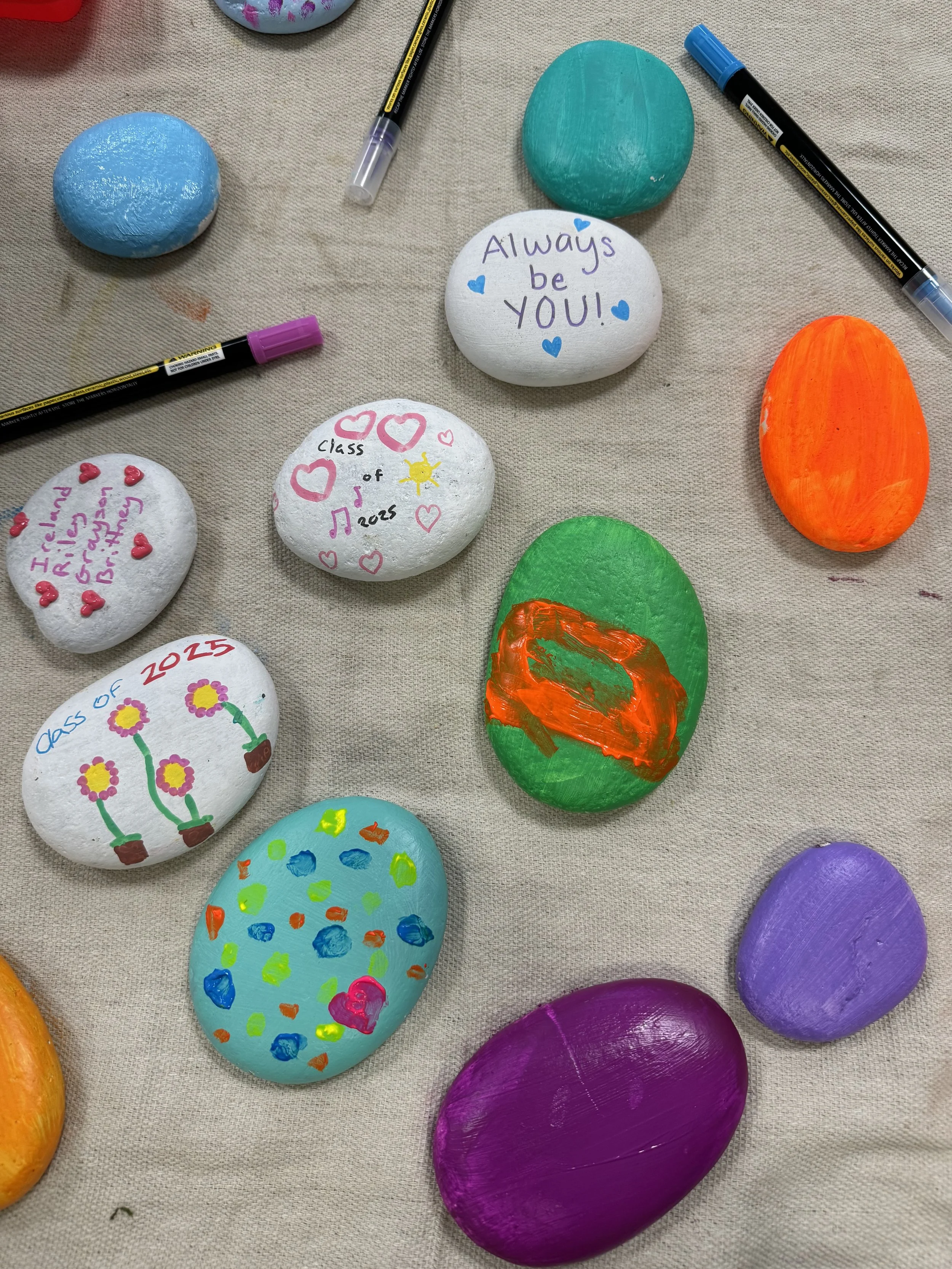
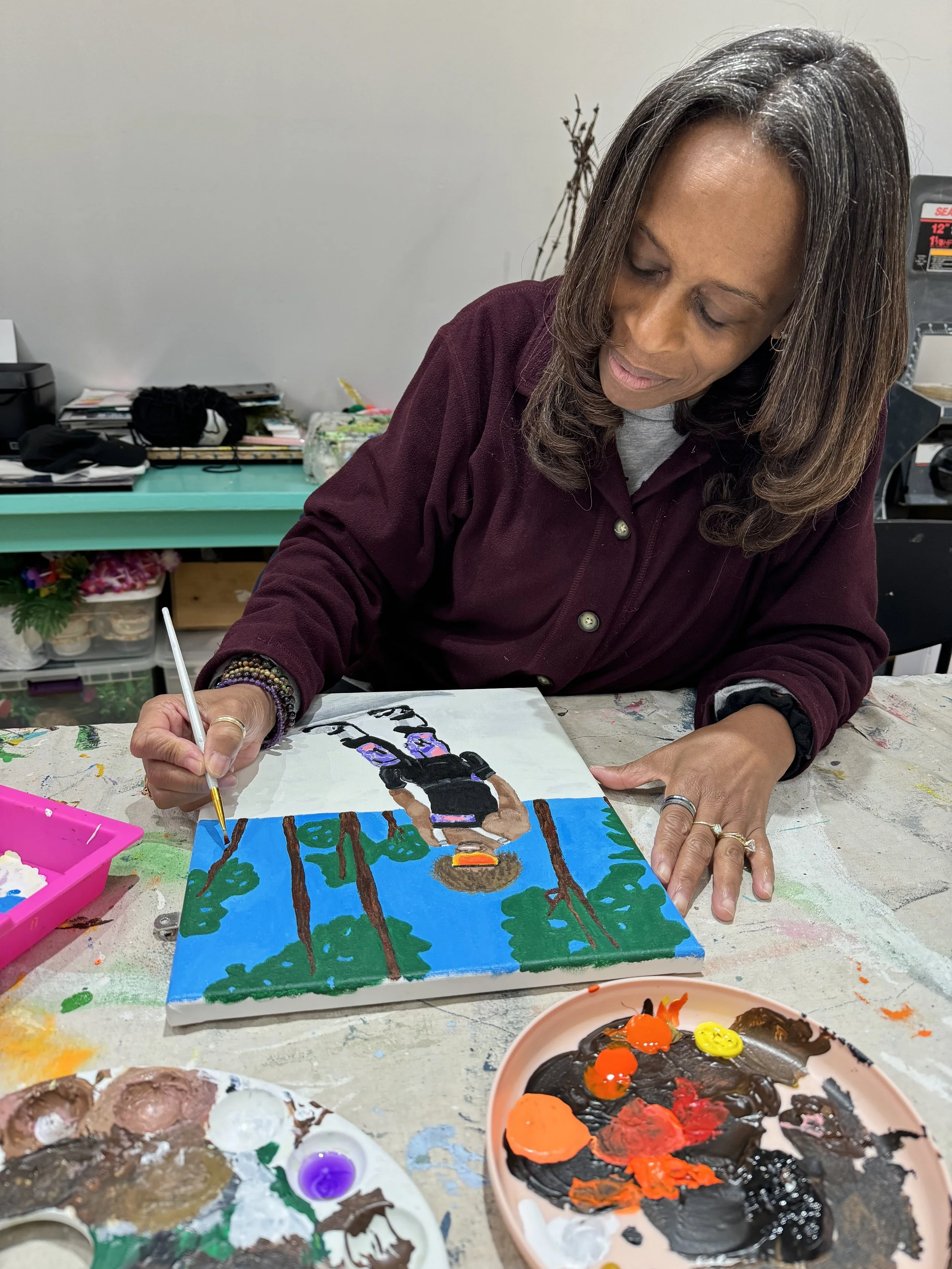
Examples of Artmaking that Heals Anxiety
Below are three forms of art that I have found make an enormous difference for people, both adults and children, who are dealing with stress and anxiety.
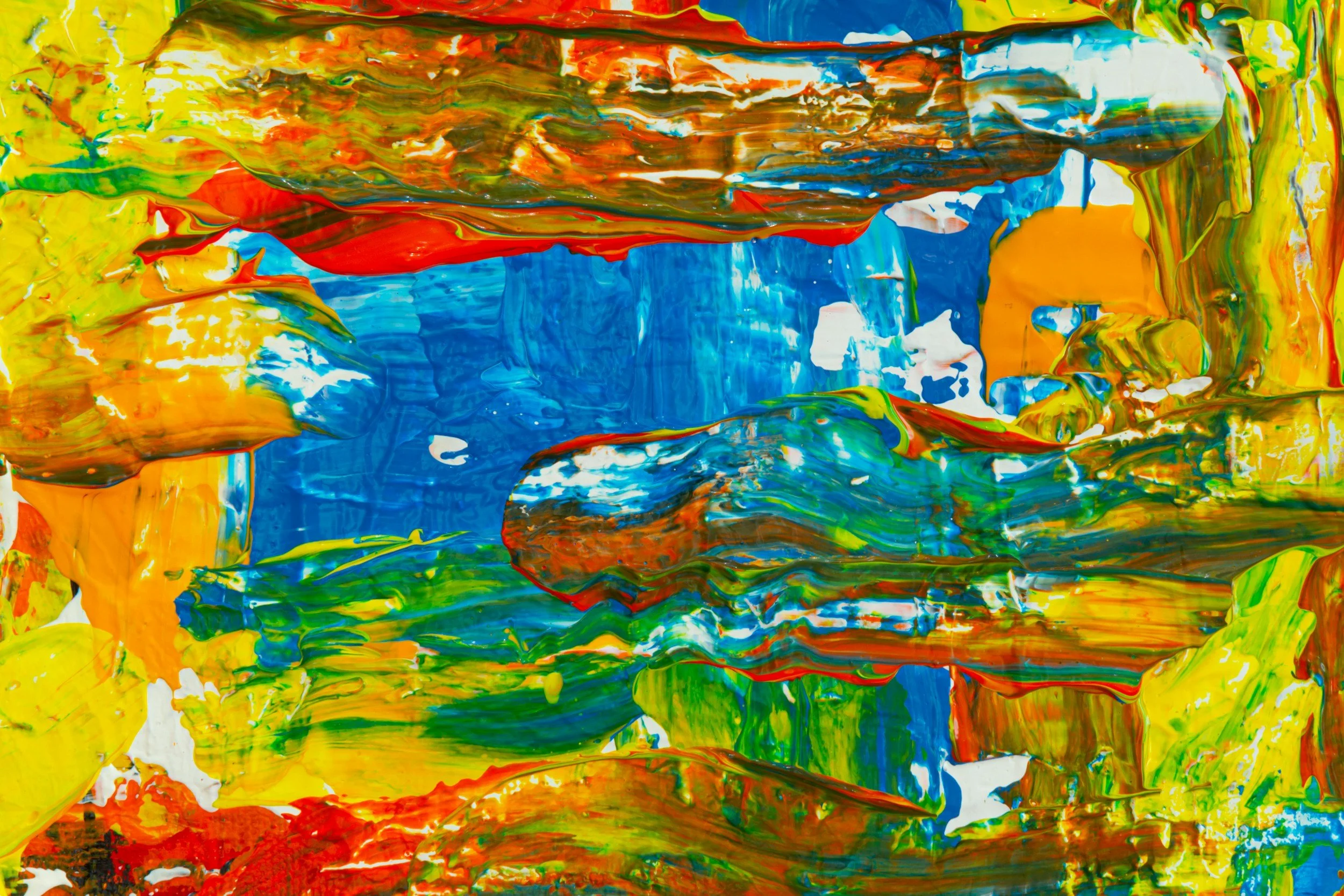
Abstract Expressionist Painting
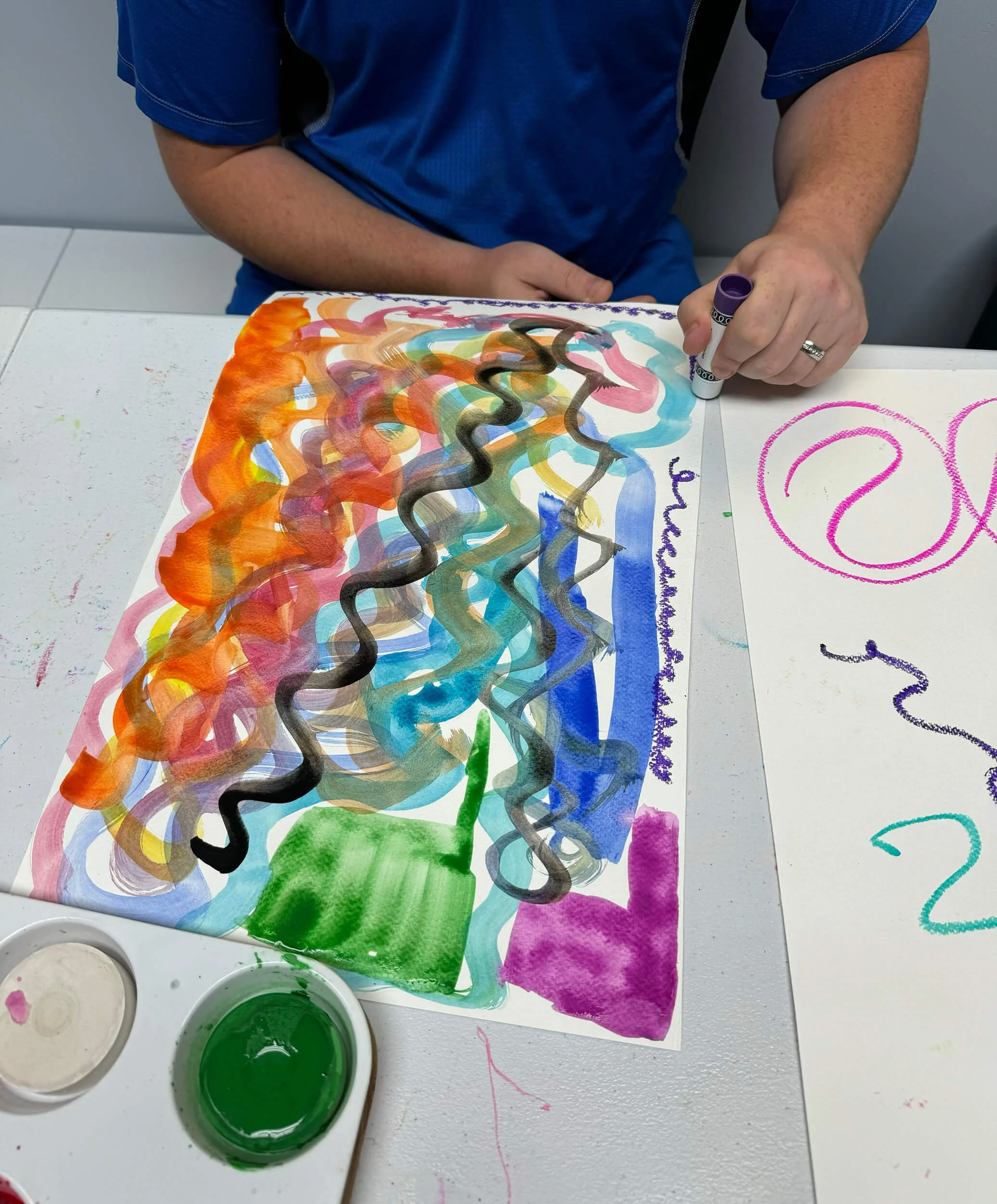
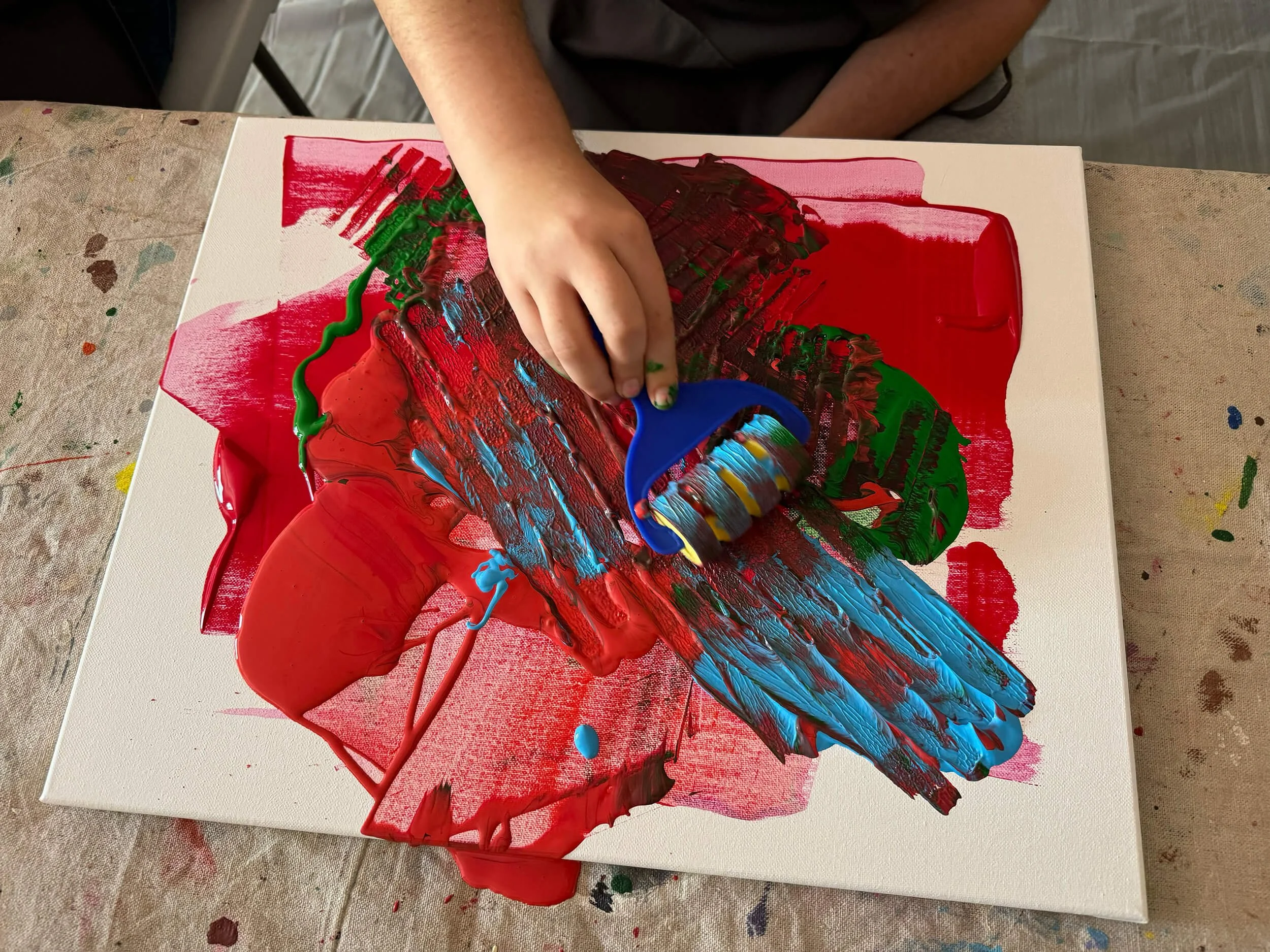
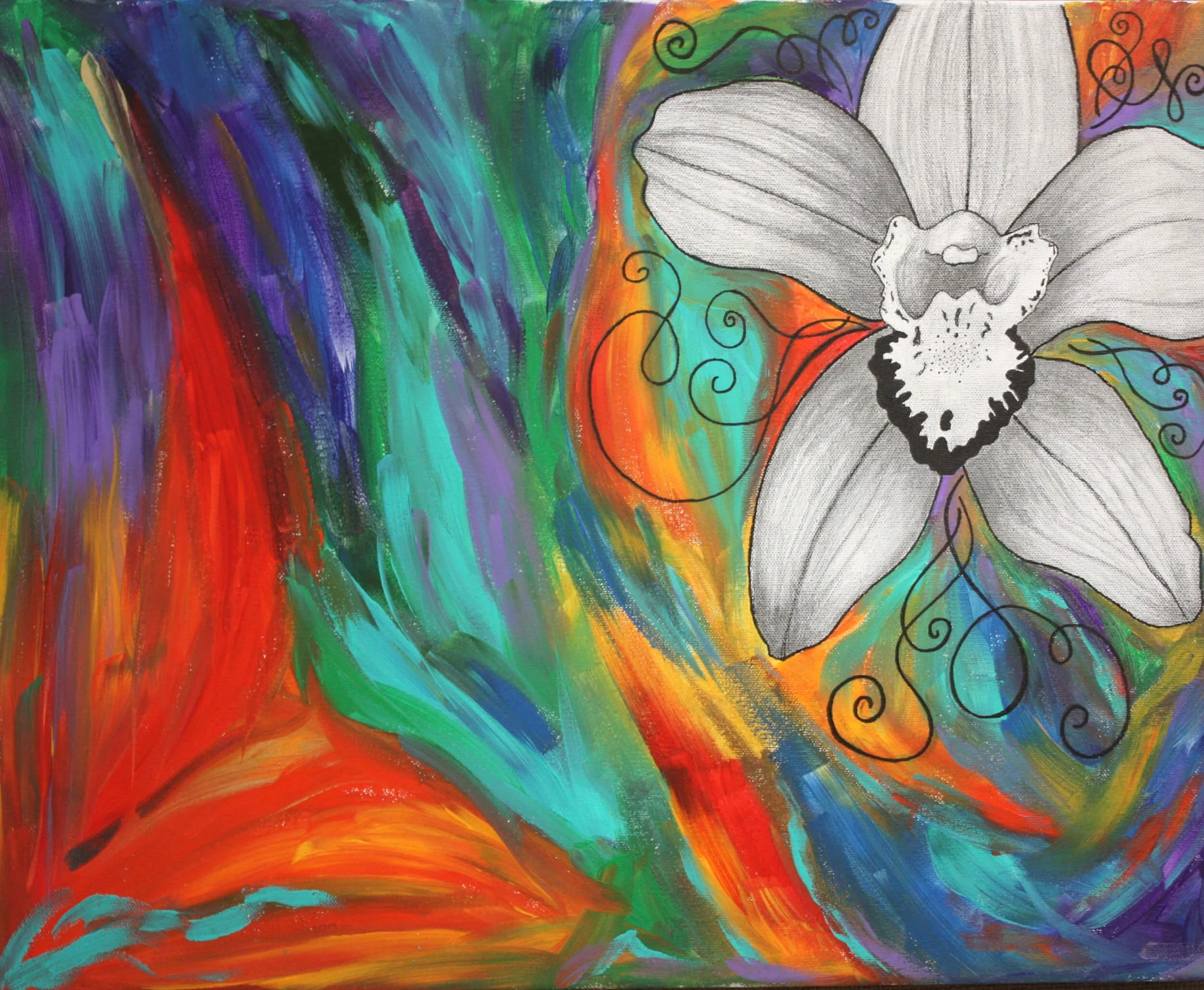
First, you create your artist’s palette, adding paint colors that speak to you. I provide you with all the tools you might need, from foam rollers to brushes, scrapers, and squeegees—and, of course, a canvas. Every choice along the way is yours. I encourage you to feel how the paint moves and follow its lead. If you are sharing the studio space with others, you’ll find that the process is usually pretty quiet, with the occasional murmur of discovery or pleasure. Some people apply paint with energy and vigor while others approach the canvas with slow deliberation. The work is abstract, and the colors, shapes and textures you explore express you and you alone. Stress ebbs away. The energy in the studio shifts as time goes by, until the level of peace in the space speaks of satisfaction, pride, and joy.
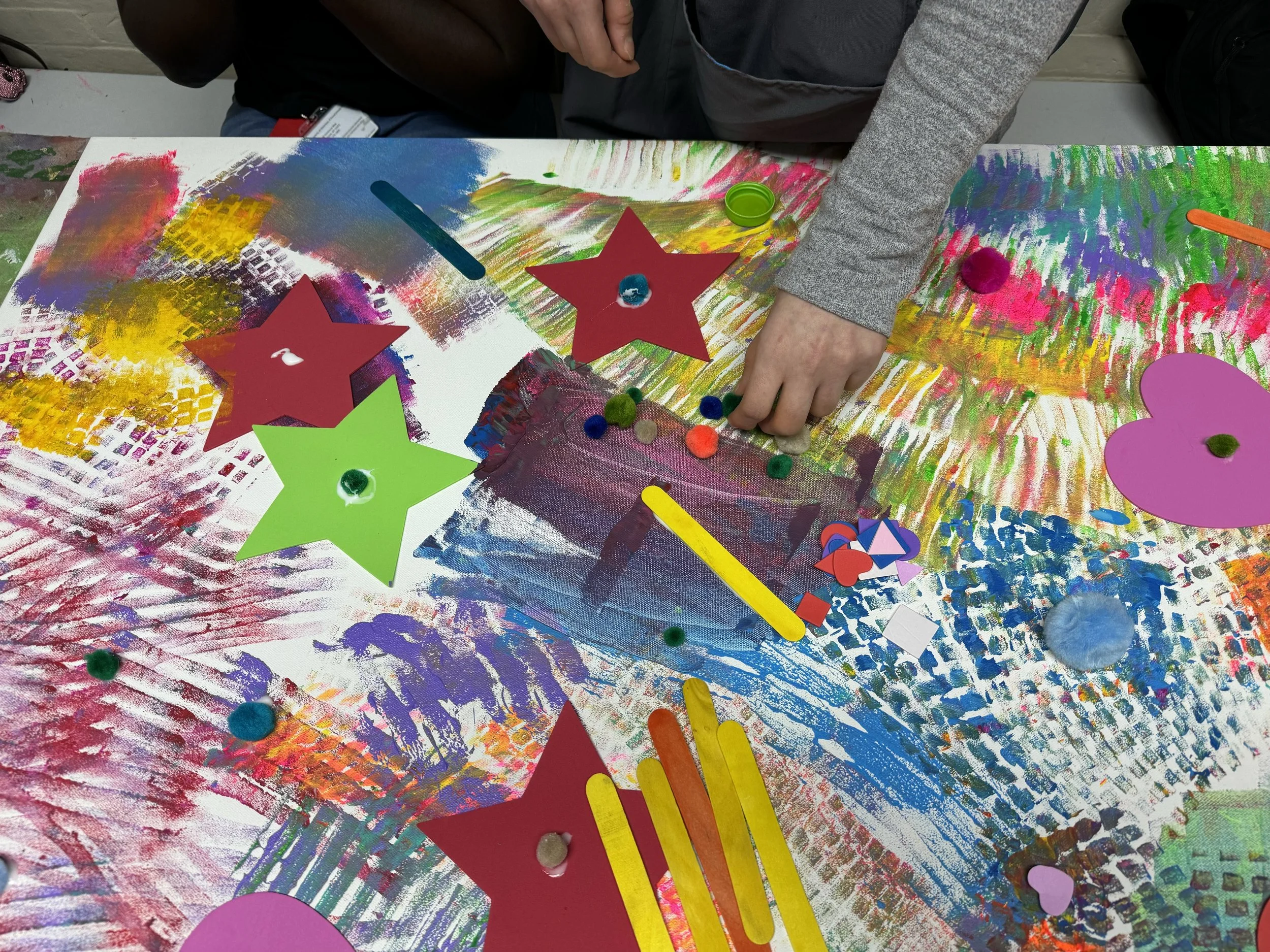
Collage
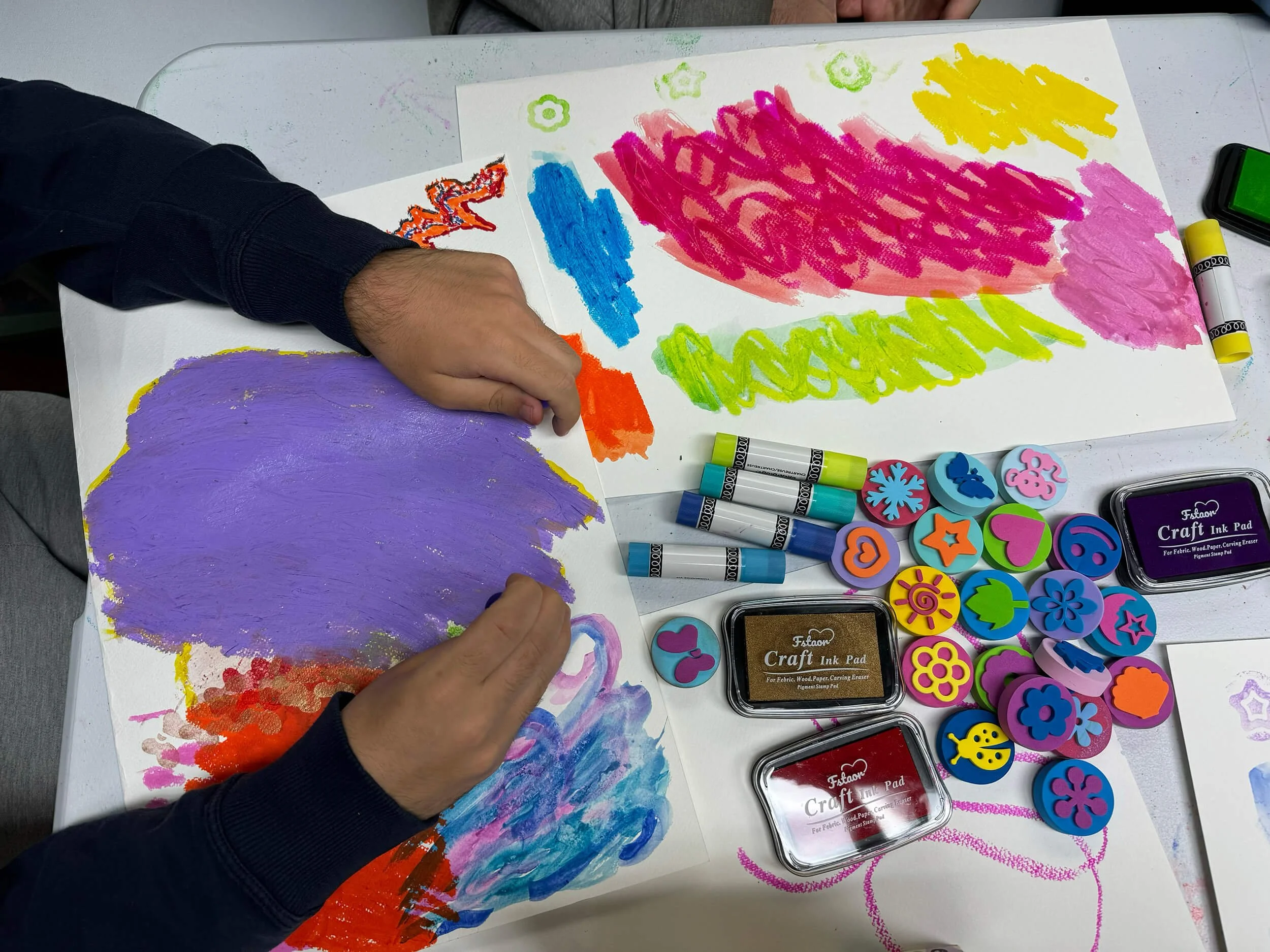
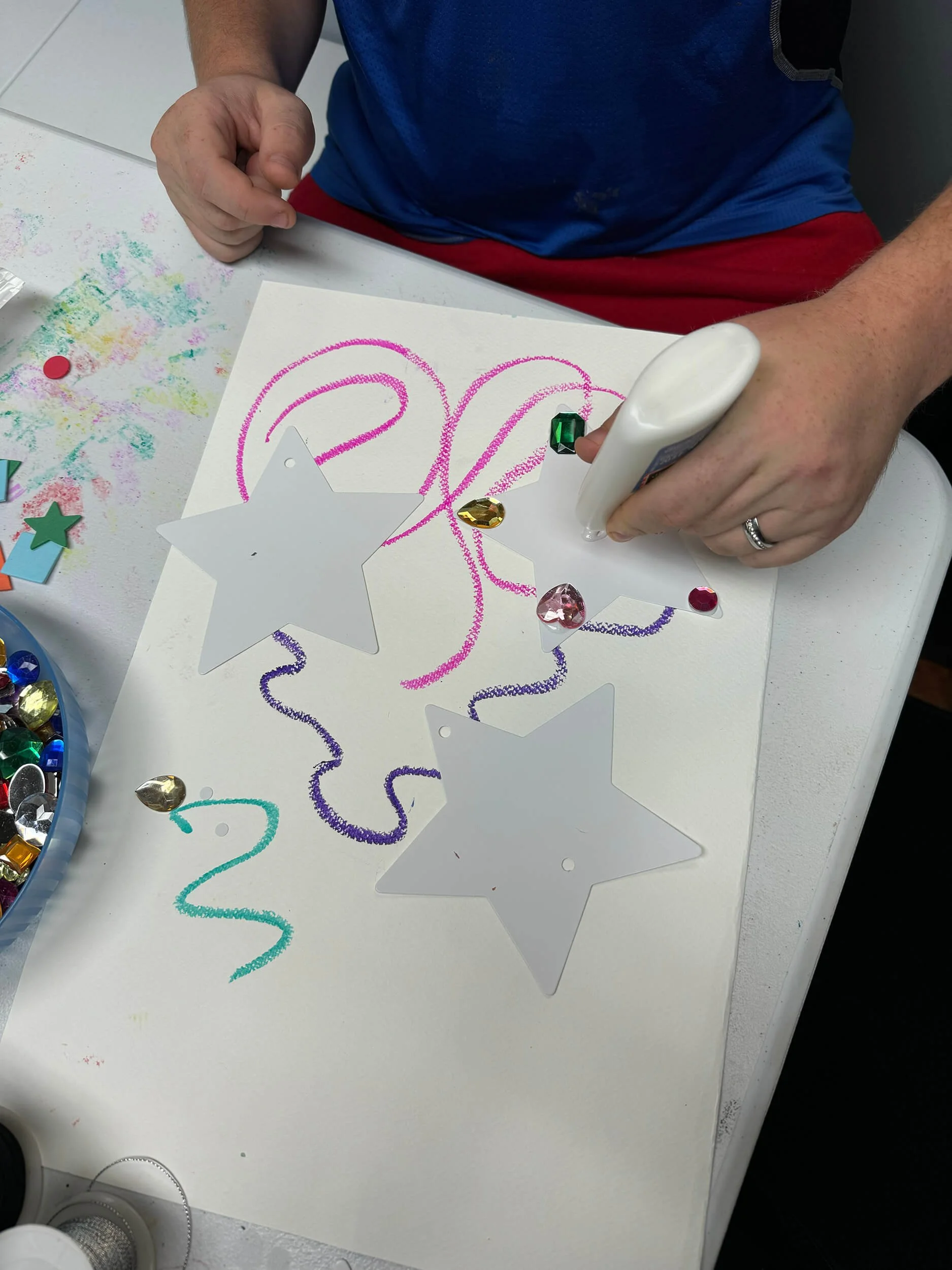
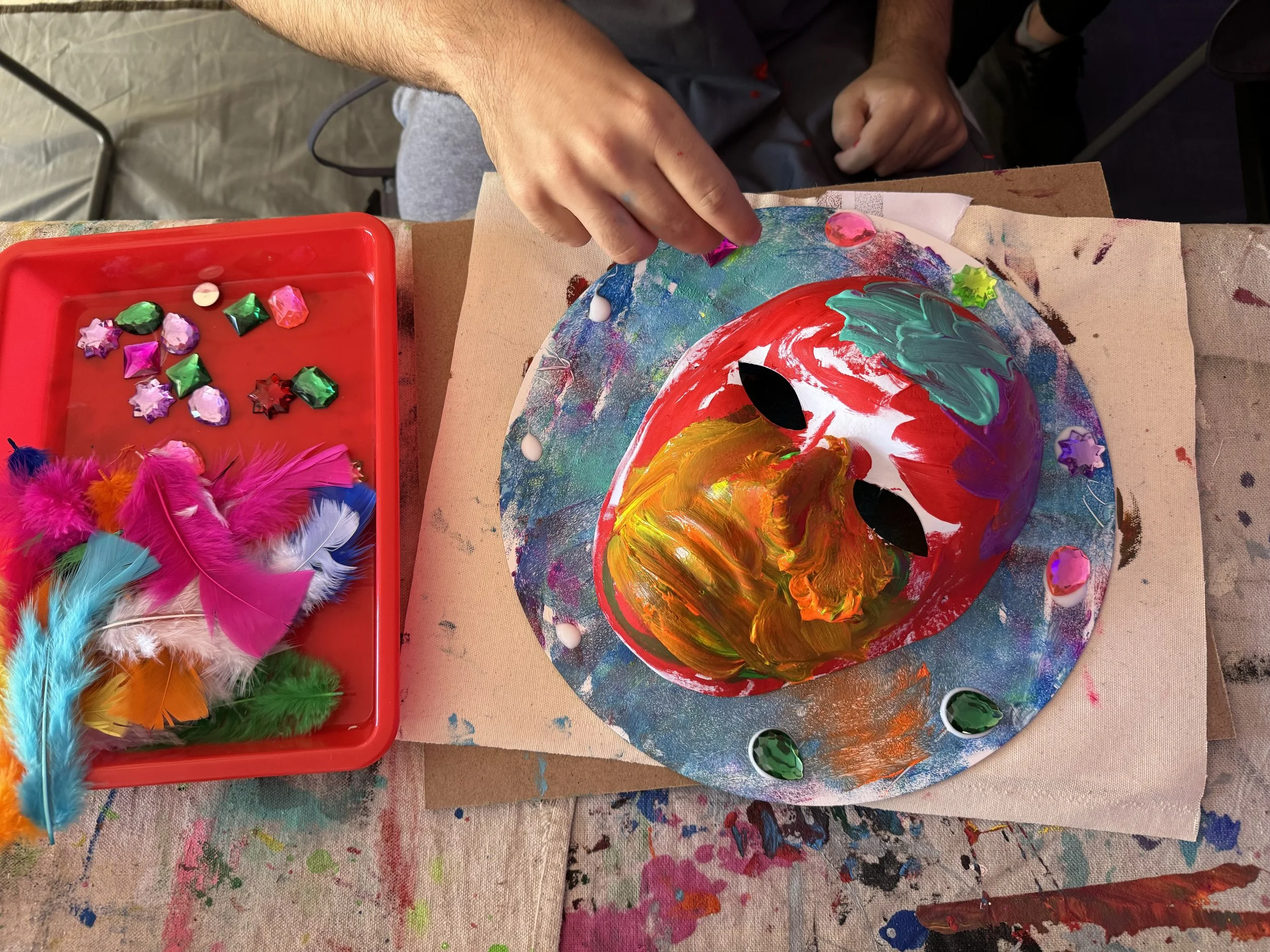
I often introduce collage to students and clients who identify as stressed or anxious. The physicality of collage-making focuses energy and distracts busy minds. You will sort through supplies and found objects, use tools like glue sticks and scissors, and build a two-dimensional work that combines sensory expression with intentional vision. You can choose items by color, texture, or size and manipulate them by cutting, tearing, stacking, or layering. You may let them extend beyond your paper background or find satisfaction in fitting them onto the field with balanced precision. Sometimes a collage tells a story. Sometimes it expresses a mood. Sometimes it reveals hidden emotions. Regardless of how your collage comes to life, it will be an outward manifestation of something you needed to say, and likely will help you find balance and calm in the process.
Mandalas
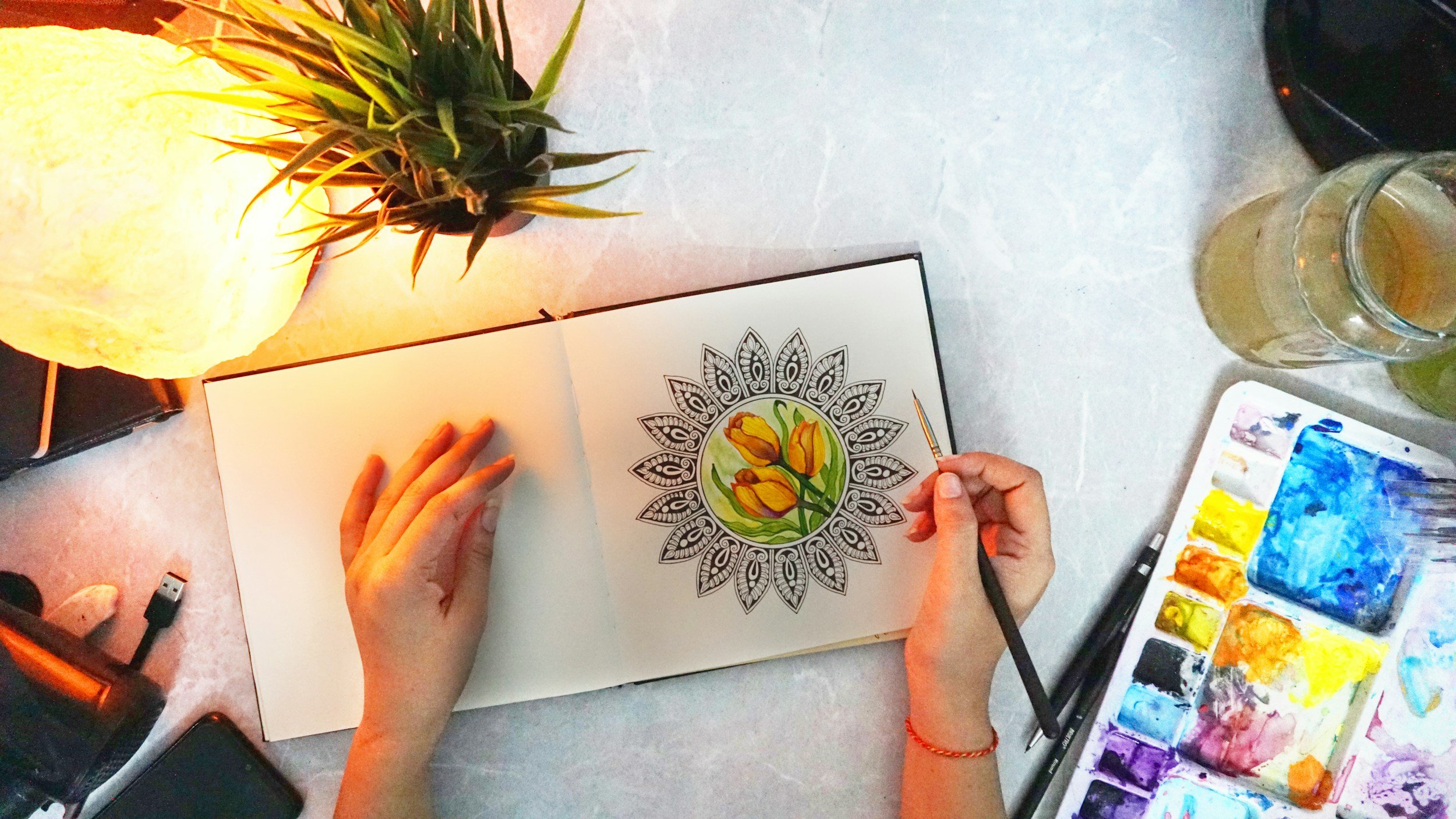
Mandalas trace back to India in the 4th century BCE. They are geometric designs within a circle and are created to convey symbolism that is meaningful to the culture in which it is created—originally the Hindu culture and religion, and also in China, Tibet, and Japan. They are traditionally used as instruments of meditation. This ancient art form has found expression in many other cultures and is used in pursuit of mindfulness. Mandala creation in artmaking for anxiety reduction is one of my favorite avenues to pursue with clients and students. The repetition involved in creating the designs is grounding and the rhythmic beauty of the work as it takes shape soothes the activated nervous system. You may find yourself envisioning your mandala fully in your mind before you begin or relish the gradual unfolding as you discover your patterns. There is no wrong way to create art, and the freedom that truth creates for people who often get stuck in their heads can be profound. I often begin mandala experiences with guided breathing exercises to help you soften into your creative, non-judgmental, relaxed mind-space.
Reach Out to Discuss How Art Can Help in Your Life
The art studio is an accepting environment where playfulness, self-reflection, and exploration co-exist. I help people of all ages and gender expressions who may be dealing with mood disorders, brain trauma, or learning differences. Often those without a clearly defined challenge simply need and benefit from the creation of art, because let’s be honest, the everyday stress of life can feel overwhelming.
Reach out by using my contact form. I will get back to you swiftly to discuss how endless creative ideas, unlimited art supplies, and the opportunity to relax into your artistic self-expression can help you.
Look for Ali Roland Studio and follow my specialized programs for artists of all ages in schools and agencies. I work with people on the ASD spectrum, with intellectual and behavioral disabilities, and traumatic brain injuries. Also visit aliroland.com to check out all my offerings and learn about my background as an art educator, artist, and activist.