
Move, Make, Heal: The Joy of Somatic Art Therapy
People are getting curious about somatic art therapy……
The news is spreading about how harnessing movement and creative expression can unlock emotional healing and resilience.
Somatic art-making has profound effects on the limbic system—essentially your emotional nervous system where emotions and behavior are regulated. The idea behind somatic therapies of all kinds is that they recognize the fact that mind and body do not operate independently. They combine into what is essentially an integrated system with a great deal of interconnectedness.
The mind can help heal the body, and the body can help heal the mind.
“You may be standing at an easel with a paintbrush in one hand, but what happens when you start to sway to the music, or even flat-out boogie? It’s incredible how quickly some people enter the flow when combining movement and artmaking”.
–Ali Roland
When you get stuck in emotions like anger, grief, or fear, it turns out that using your body can
get you unstuck. Yoga is an ancient form of somatic therapy practiced by millions who find the body movements and poses help them center, balance, and find mental and emotional ease. And, it turns out, body-centered art making is really good at that too. Regardless of what kind of art you are creating, from a finger-painted mural to a 10-foot-tall wooden sculpture, somatic art therapy is all about using body movement and sensation throughout the creation process.
As an art educator, I adore facilitating joyful somatic artmaking for people of all ages. Students respond with joy as they combine physical and creative processes. The brain cannot focus on sadness, anxiety, or stress when the body is dancing and painting at the same time! Yes!
Get the movement going on in your classroom- everyone will respond with joy!
In the classroom, I start by putting on music and giving everyone permission to fidget, move, or swing their arms. You don’t have to look at me, sit down, or even stand still. Getting into the creative groove while you engage mind and body is the first step. Everyone’s learning style and creative juice will be different. Even very young children have an intuitive sense of how they work best. Chairs are great if you need to do a detailed botanical drawing, but if you want to walk, dance, stand, swing, or jiggle while you work—that’s somatic art!
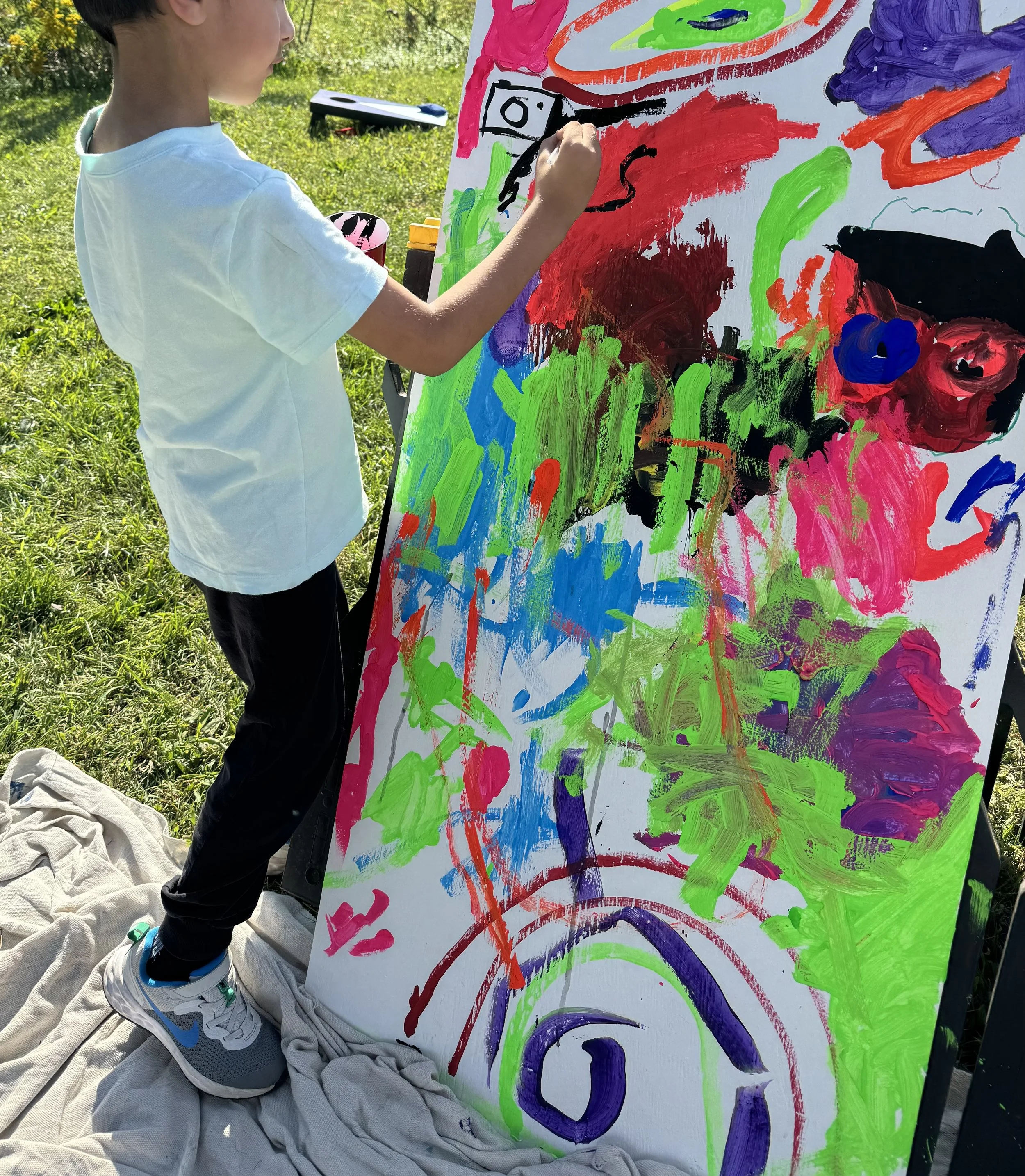
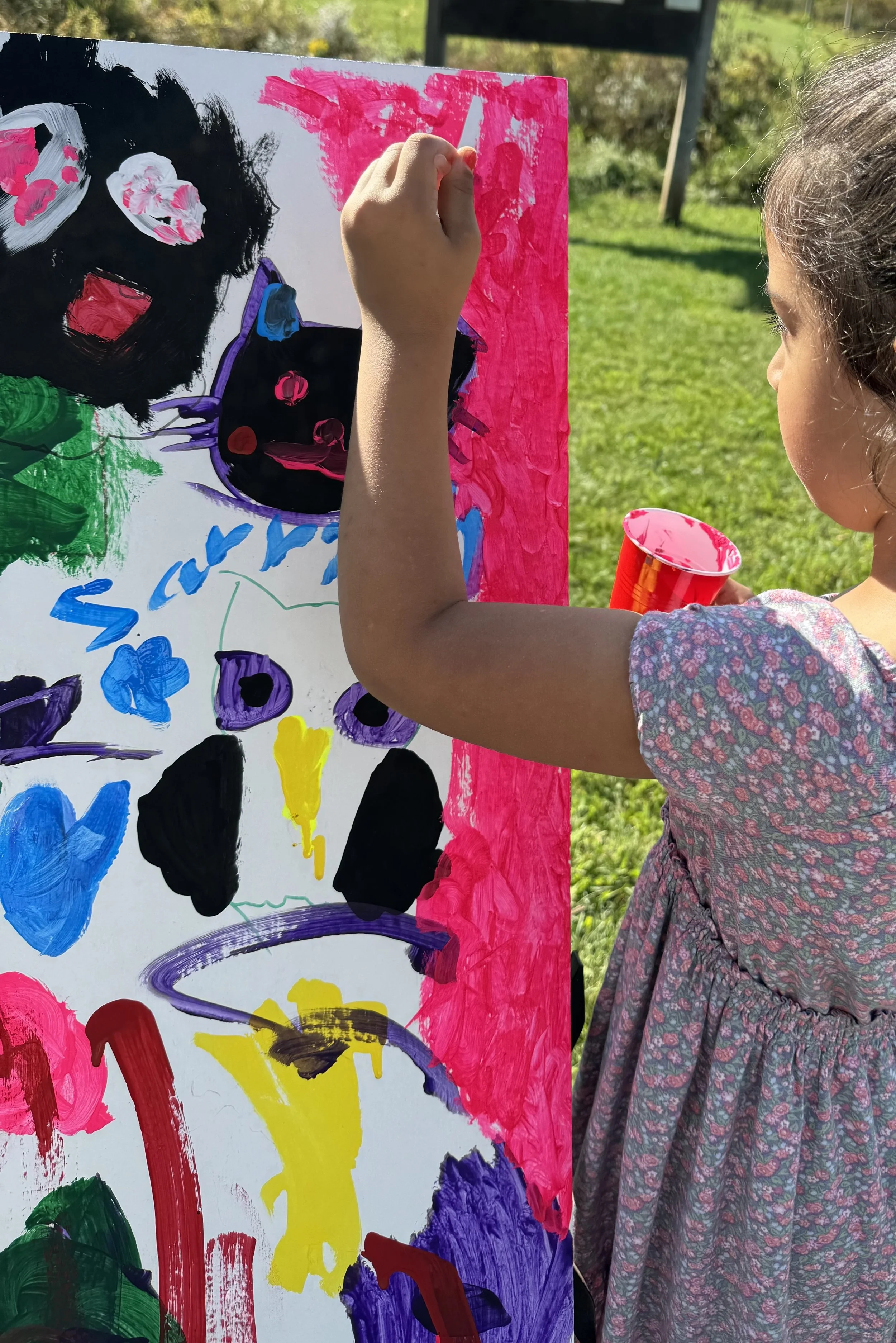
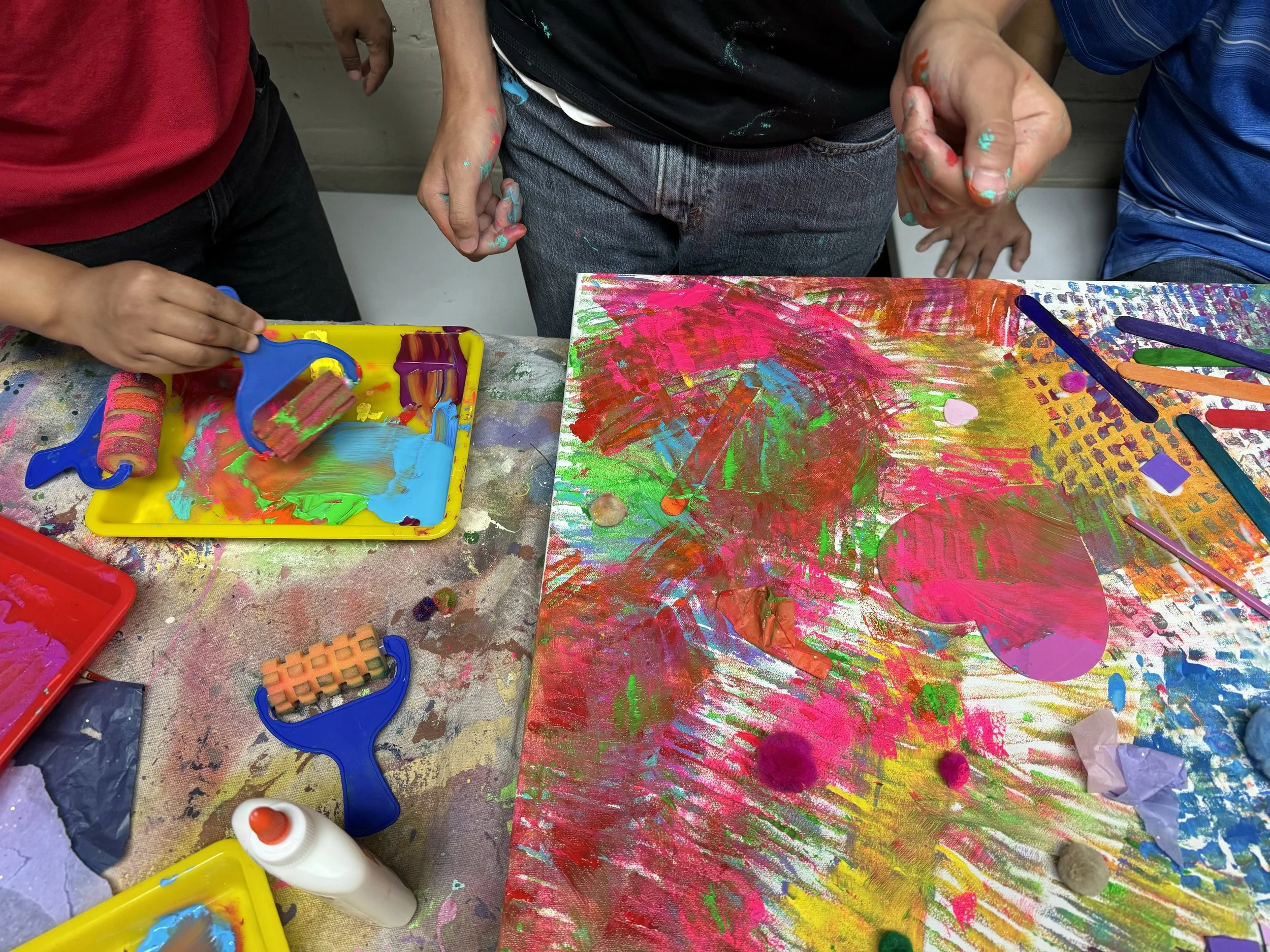
This practice is indeed perfect for everyone: the very young, the elderly, people with intellectual or behavioral disabilities, are neurodivergent or on the autism spectrum, people with ADD or ADHD, and anyone dealing with stress, wanting to escape mental chatter, and looking to find emotional release.
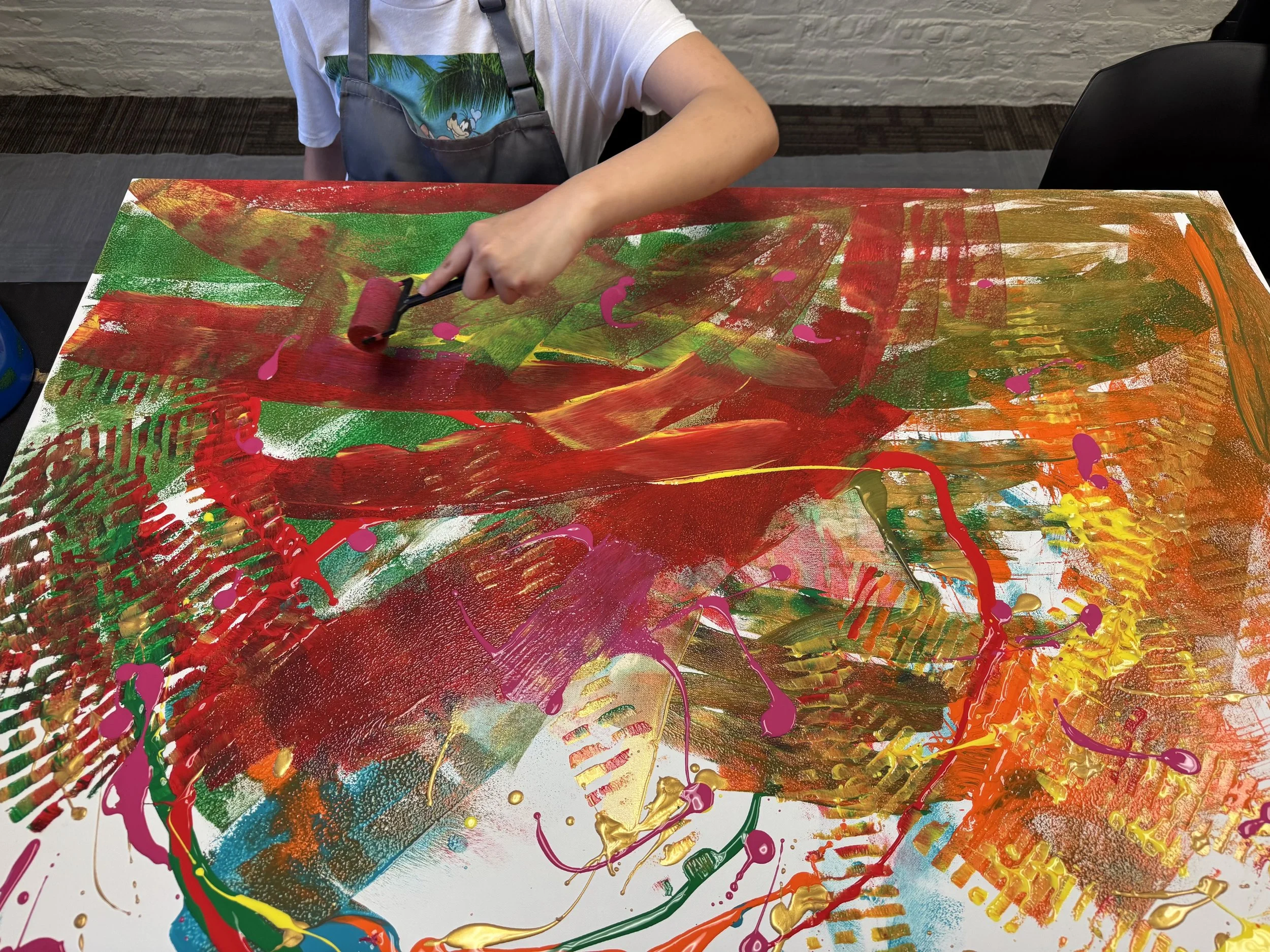
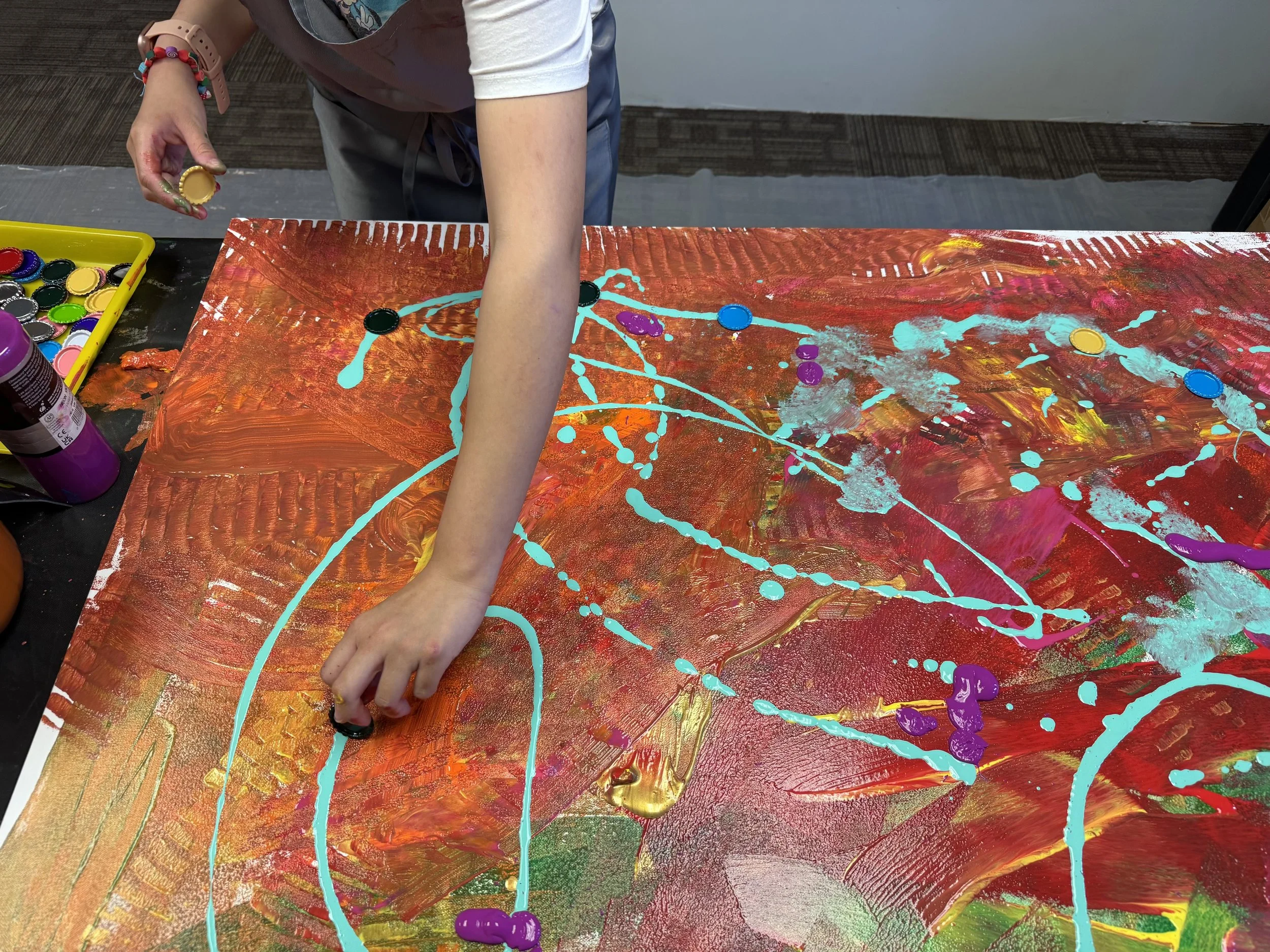
One exercise that leads swiftly to catharsis and joy involves ambidextrous arm movement, which often helps people get in touch with previously unavailable parts of their power or release certain heavy emotions. Standing before a large piece of paper on a tabletop, using brushes or your fingers or whole hand, make big circles with your arms as you apply paint. Or you can move each hand in a different way to “trick” your brain into letting go of all the “shoulds” and “rules” you might have brought into the studio with you.
While licensed art therapists can engage their patients in somatic artmaking to heal deep-seated trauma and mitigate serious mental challenges, the practice of somatic art is available to and beneficial for one and all.
The goal is release, not artistic masterpieces. The body, not the mind, guides the creation process, so your creation may look like a pair of giant yellow wings, a long row of purple spirals, or phantasmagorical scribbles! Someone might start singing, and I’ve had entire rooms full of swaying, moving, swirling art makers join in until a glorious sound rises to the ceiling. Imagine!
Body, mind, and soul flowing together into art.